
It’s all about the junk fees with good ole’ Con Edison.
Confession: My Electricity Bill is Small, But the Lesson Applies to Everyone
I have to confess upfront — my electricity bill is relatively small. This is a co-op unit I use as an office, so using 229 kWh in a month is nowhere near what some homes consume. Families with larger homes and more appliances may use two to three times that amount. But even with this modest usage, the lesson here applies to everyone: the price per kilowatt-hour (kWh) that energy providers advertise is essentially a meaningless number when you look at your full bill.
Let me show you how, using my January 2025 Con Ed bill as an example. I’ll even consider what happens if you switch to a third-party energy supplier (an ESCO) offering to cut your supply rate by 50% — and why that savings is, ultimately, a waste of time and effort.
Breaking Down My Current Bill
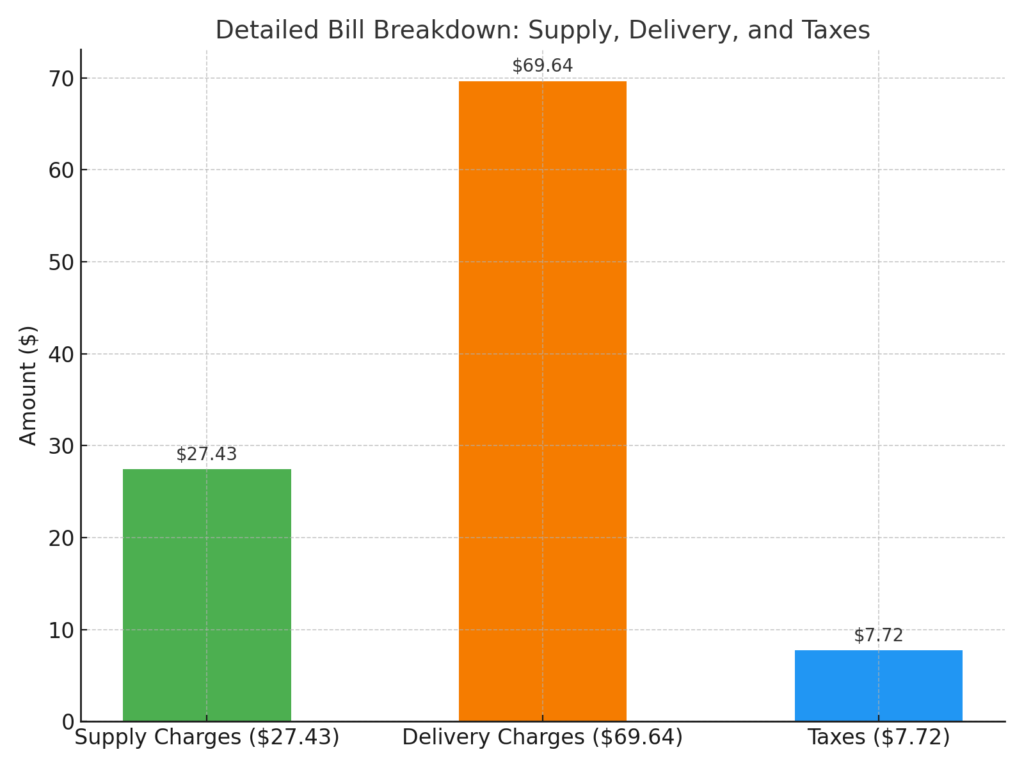
Here’s what my Con Edison bill looks like:
- Total Usage: 229 kWh
- Advertised Supply Rate: $0.10856/kWh
- Supply Charges: $27.43
- Delivery Charges (plus taxes): $69.64
- Total Bill: $97.07
The key takeaway? The supply charges — the part of the bill affected by switching to an ESCO — only make up 28% of my total bill. The rest comes from delivery fees, taxes, and surcharges, which are non-negotiable.
What Happens with a 50% Off Supply Rate?
Now, let’s assume I switched to an ESCO offering a 50% discount on my supply rate. Here’s how that would look:
- New Supply Rate: 0.10856×0.5=0.05428 (5.4 cents per kWh).0.10856 \times 0.5 = 0.05428 \, \text{(5.4 cents per kWh)}.
- New Supply Charges: 229×0.05428=12.43 (new supply charges).229 \times 0.05428 = 12.43 \, \text{(new supply charges)}.
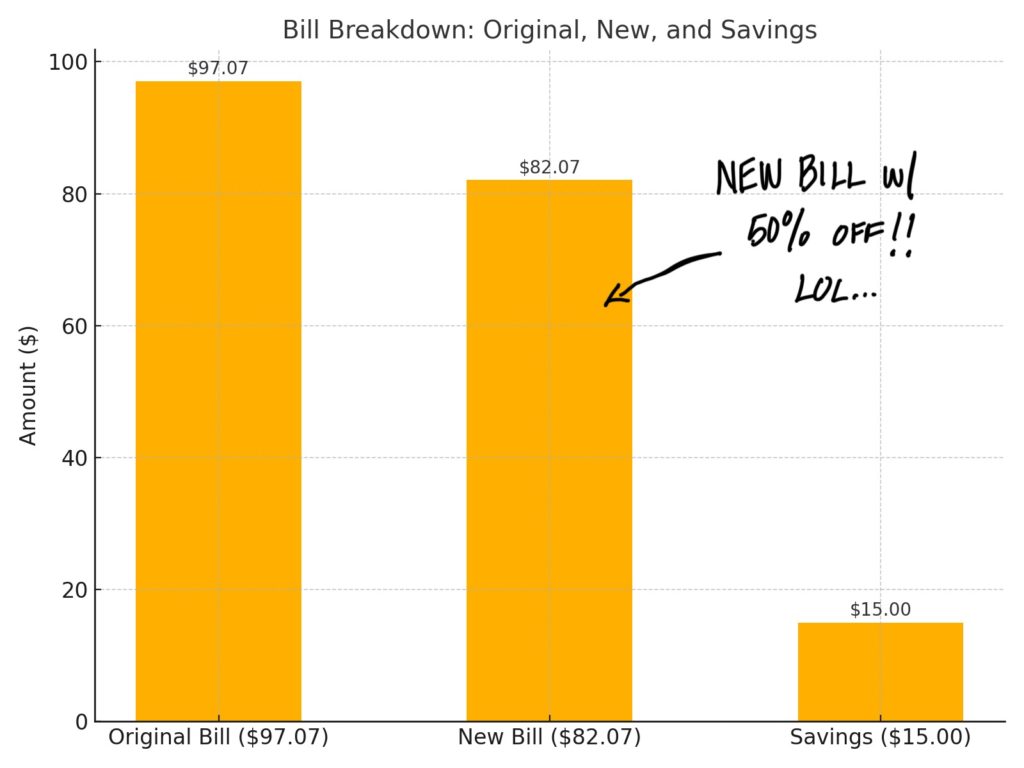
By switching, my supply charges drop from $27.43 to $12.43, saving $15.00. But that’s only part of the story.
Total Bill with ESCO Savings
The delivery charges and taxes remain unchanged, at $69.64. Here’s the new total bill: New Total Bill=New Supply Charges+Delivery Charges and Taxes.\text{New Total Bill} = \text{New Supply Charges} + \text{Delivery Charges and Taxes}. New Total Bill=12.43+69.64=82.07.\text{New Total Bill} = 12.43 + 69.64 = 82.07.
So, with a 50% discount on the supply rate, my total bill drops from $97.07 to $82.07 — a savings of $15.00.
The Actual Savings

Now, let’s calculate what you’re really saving as a percentage of the entire bill: Percentage Savings=Original Bill−New BillOriginal Bill×100.\text{Percentage Savings} = \frac{\text{Original Bill} – \text{New Bill}}{\text{Original Bill}} \times 100. Percentage Savings=97.07−82.0797.07×100≈15.5%.\text{Percentage Savings} = \frac{97.07 – 82.07}{97.07} \times 100 \approx 15.5\%.
Even though the ESCO promises a 50% discount, the actual savings on the total bill is only 15.5%.
Why This Doesn’t Work
Here’s why this isn’t worth the effort:
- The Supply Charge is Small: As I said earlier, the supply charge makes up only 28% of your total bill. Even a huge discount here won’t have a big impact overall.
- Delivery Charges and Taxes are Unavoidable: These make up the bulk of your bill — over 70% in my case — and they don’t change no matter which supplier you choose.
- Locking Into a Contract: Switching to an ESCO often means locking into a contract that can include hidden fees or rate hikes after an introductory period. You’re doing extra work for very little gain.
Do Your Own Math
Everyone’s electricity usage and bill are different, so I encourage you to grab your latest bill and do the math yourself. Look at:
- Total Usage (kWh)
- Total Supply Charges
- Total Delivery Fees and Taxes
Then calculate your real cost per kWh by dividing the total bill by your total usage. Chances are, you’ll see the same pattern: the advertised price per kWh is a distraction. What really matters is the total cost, and ESCOs don’t meaningfully lower that.
The Bottom Line
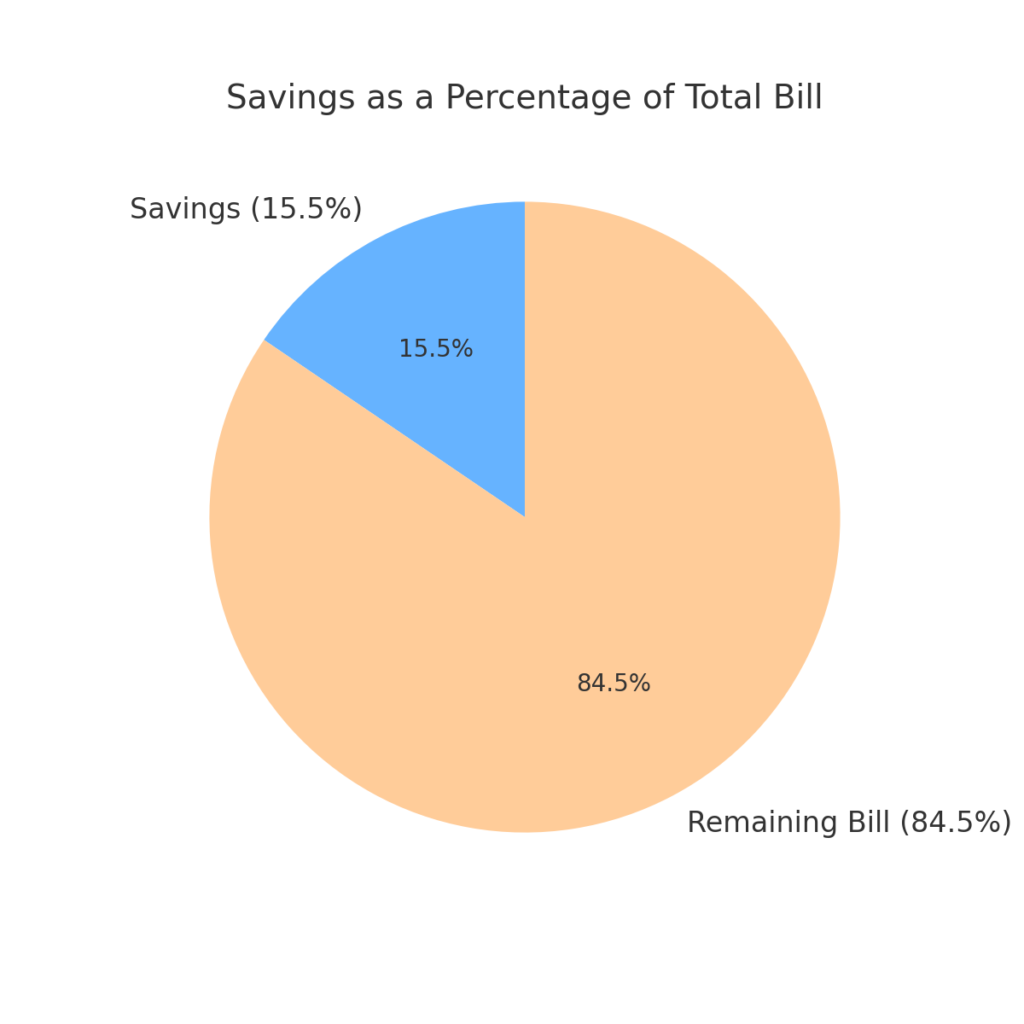
Switching to an ESCO for a “50% off” supply rate might sound like a great idea, but in reality, it’s almost pointless. In my case, it saved me just $15.00 — or 15.5% of my total bill. For all the effort of locking into a contract and dealing with the fine print, that’s not much of a reward.
So, before you get sold on flashy marketing, do the math. The savings probably aren’t worth the trouble.